Classic Fish and Chips (Crispy British Style)
Classic Fish and Chips (Crispy British Style)
Introduction
There’s nothing quite like authentic classic fish and chips (crispy British style) to transport you straight to a seaside pub in England. This iconic dish features flaky white fish wrapped in a shatteringly crispy beer batter, served alongside thick-cut chips that are fluffy inside and golden outside.
While fish and chips might seem like pub food reserved for takeaway nights, making this beloved British classic at home is easier than you think. With the right technique and a few insider secrets, you can recreate that perfect crispy coating and tender fish that makes this dish a timeless favorite.
Whether you’re craving a taste of Britain, planning a themed dinner party, or simply want to master one of the world’s most beloved comfort foods, this recipe delivers authentic results every single time.
Get ready to say “bloody brilliant!” as you bite into the crispiest, most delicious fish and chips you’ve ever made.
Table of Contents
Why You’ll Love This Recipe
This authentic British fish and chips recipe has everything you need for the perfect Friday night feast:
- Restaurant-quality results – Rivals the best chippies in London
- Ultra-crispy coating – The beer batter creates an unbeatable crunch
- Perfectly fluffy chips – Double-frying technique ensures golden perfection
- Authentic British flavor – Just like you’d get across the pond
- Impressive but achievable – Easier than you’d expect for such impressive results
- Family favorite – Kids and adults alike devour this meal
- Perfect for gatherings – Great for game day or casual entertaining
- Customizable – Easy to adjust portion sizes and accompaniments
- Comforting and satisfying – The ultimate feel-good food
Ingredients
For the Fish:
- 4 large white fish fillets (cod, haddock, or pollock, 6-8 oz each)
- 2 cups all-purpose flour (divided)
- 1½ cups cold beer (lager or pale ale works best)
- 1 teaspoon baking powder
- 1 teaspoon salt
- ½ teaspoon black pepper
- ½ teaspoon paprika
- Vegetable or canola oil for deep frying (about 2 quarts)
For the Chips:
- 4 large russet potatoes (about 2½ pounds)
- Vegetable oil for frying
- Sea salt to taste
For Serving:
- Malt vinegar
- Tartar sauce
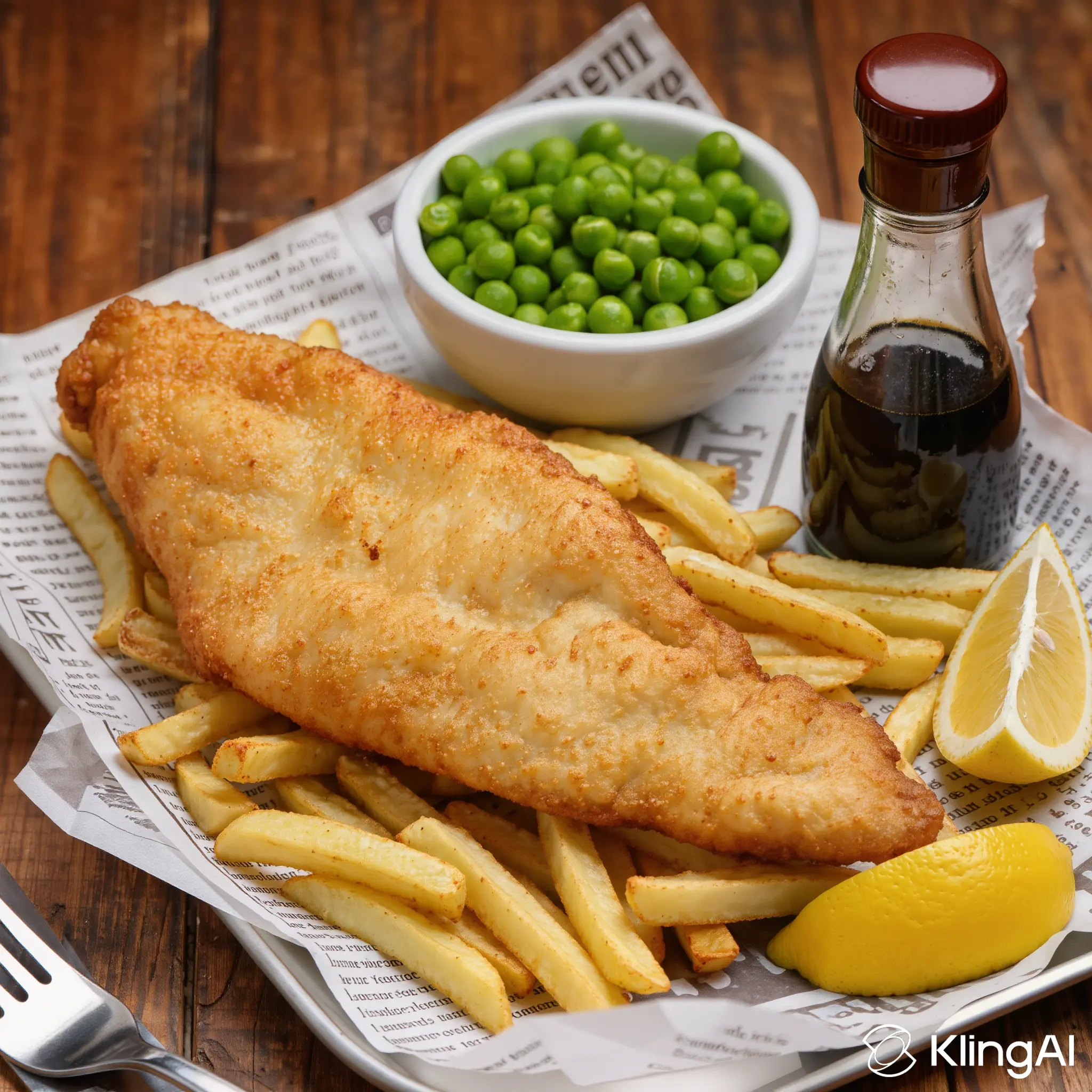
- Mushy peas (traditional British side)
- Lemon wedges
- Salt and pepper
Step-by-Step Instructions
Step 1: Prepare the Chips
Peel the potatoes (or leave skin on for a rustic touch). Cut them into thick chips, about ½ to ¾ inch wide. The British style is thicker than American French fries.
Rinse the cut potatoes in cold water to remove excess starch. Pat them completely dry with kitchen towels—this is crucial for crispy chips.
Step 2: First Fry for the Chips
Heat oil in a large, heavy-bottomed pot or deep fryer to 325°F (160°C). Use a thermometer to maintain accurate temperature.
Carefully lower the chips into the oil in batches. Don’t overcrowd the pot. Fry for 5-7 minutes until they’re cooked through but still pale and soft.
Remove with a slotted spoon and drain on paper towels. Let them cool completely—you can do this step up to 2 hours ahead.
Step 3: Prepare the Fish
Pat the fish fillets completely dry with paper towels. Cut them into portions if they’re too large. Season lightly with salt and pepper.
Set up your breading station: Place 1 cup of flour in a shallow dish for dredging.
Step 4: Make the Beer Batter
In a large bowl, whisk together the remaining 1 cup of flour, baking powder, salt, pepper, and paprika.
Gradually pour in the cold beer while whisking. Mix until just combined—the batter should be slightly lumpy and thick enough to coat the back of a spoon. Don’t overmix, as this can make the batter tough.
Let the batter rest for 10 minutes. This allows the gluten to relax and creates a lighter, crispier coating.
Step 5: Heat the Oil for Fish
Heat your frying oil to 375°F (190°C). This higher temperature is essential for achieving that signature crispy batter.
The oil should be at least 3 inches deep to properly submerge the fish.
Step 6: Batter and Fry the Fish
Lightly coat each fish fillet in the plain flour, shaking off excess. This helps the batter adhere better.
Dip the floured fish into the beer batter, letting excess drip off. The coating should be generous but not overly thick.
Carefully lower the fish into the hot oil, laying it away from you to avoid splashing. Fry 2-3 pieces at a time to maintain oil temperature.
Fry for 6-8 minutes, turning once halfway through, until the batter is deep golden brown and crispy. The fish should float when done.
Remove with a slotted spoon and drain on a wire rack or paper towels. Keep warm in a 200°F oven while you finish the rest.
Step 7: Second Fry for the Chips
Increase the oil temperature back to 375°F (190°C). Return the pre-cooked chips to the hot oil in batches.
Fry for 3-4 minutes until deeply golden and crispy. This second fry creates that perfect contrast of crispy exterior and fluffy interior.
Drain on paper towels and season immediately with sea salt.
Step 8: Serve Immediately
Arrange the fish and chips on newspaper or parchment paper for authentic presentation. Serve piping hot with malt vinegar, tartar sauce, mushy peas, and lemon wedges.
Tips for Best Results
Master these techniques for classic fish and chips (crispy British style) that rival any British chippy:
Choose the Right Fish: Cod is traditional, but haddock offers sweeter flavor. Both should have thick, firm fillets. Avoid thin, delicate fish that might fall apart.
Ice-Cold Beer Matters: The carbonation and cold temperature create a lighter, crispier batter. Never use warm or flat beer.
Temperature Control is Everything: Use a thermometer religiously. Oil that’s too cool makes greasy food; too hot burns the outside before cooking the inside.
Don’t Skip Double-Frying: This two-step process is the secret to proper British chips. The first fry cooks them through; the second creates the crispy exterior.
Dry Everything Thoroughly: Moisture is the enemy of crispiness. Pat fish and potatoes completely dry before frying.
Work in Batches: Overcrowding drops oil temperature dramatically, resulting in soggy, greasy food.
Use a Wire Rack: Draining on paper towels can trap steam and make the coating soggy. A wire rack allows air circulation.
Serve Immediately: Fish and chips are best enjoyed fresh. The coating loses crispness as it sits.
Safety First: Never leave hot oil unattended. Keep a fire extinguisher nearby and never use water on an oil fire.
Variations & Substitutions
Fish Alternatives:
- Haddock – Traditional British choice, slightly sweeter than cod
- Pollock – Budget-friendly, sustainable option
- Halibut – Premium choice with firm, meaty texture
- Plaice – Thinner fillet, reduce cooking time
- Hake – Popular in northern England
Batter Variations:
- Gluten-free: Use gluten-free flour blend and gluten-free beer
- Lighter version: Add vodka to the batter (alcohol evaporates, leaving it extra crispy)
- Tempura-style: Use sparkling water instead of beer for Japanese twist
- Extra crispy: Add cornstarch to the flour mixture
Chip Alternatives:
- Sweet potato chips – Healthier alternative with natural sweetness
- Wedges – Easier to cut, rustic presentation
- Curly fries – Fun variation for kids
- Skin-on chips – More nutrients and rustic texture
Dietary Modifications:
- Baked version: Bake at 425°F for 20-25 minutes (won’t be as crispy but healthier)
- Air fryer: Coat fish in batter and air fry at 400°F for 12-15 minutes
- Lower carb: Use almond flour in the batter and serve with roasted vegetables
Serving Suggestions
Complete your authentic British fish and chips experience with these traditional accompaniments:
Essential Sides:
- Mushy peas (mashed marrowfat peas)
- Tartar sauce (homemade is best)
- Malt vinegar (the British way)
- Lemon wedges
Traditional Additions:
- Pickled onions
- Pickled eggs
- Curry sauce (popular in northern England)
- Chip shop curry (different from Indian curry)
Beverages:
- British bitter or lager
- Ginger beer (non-alcoholic)
- Traditional English tea
- Sparkling lemonade
Presentation Ideas:
- Wrap in newspaper for authentic chippy experience (use food-safe paper)
- Serve in paper cones or baskets
- Use checkered paper liners
- Add British flags for themed parties
Storage & Reheating Tips
Storing Leftovers:
Let fish and chips cool completely. Store separately in airtight containers lined with paper towels to absorb moisture. Refrigerate for up to 2 days.
Note: Fried foods are always best fresh. Leftovers won’t be as crispy but can still be enjoyable.
Freezing:
Fish: Freeze unbattered fish fillets for up to 3 months. Thaw in refrigerator before battering and frying.
Chips: Freeze after the first fry (before the second fry). Complete the second fry when ready to serve.
Battered fish: Not recommended as the coating becomes soggy when frozen.
Reheating Methods:
Oven (Best Method): Preheat to 400°F. Place fish and chips on a wire rack over a baking sheet. Heat for 10-15 minutes until warmed through and crisped up.
Air Fryer: Reheat at 375°F for 5-7 minutes. This method restores some of the original crispiness.
Microwave (Not Recommended): Will make everything soggy. Only use if you’re desperate, using 50% power for 1-2 minutes.
Stovetop: Pan-fry in a little oil over medium heat to restore crispness.
Health Benefits
While classic fish and chips is an indulgent treat, it offers nutritional benefits:
High-Quality Protein: White fish provides lean protein essential for muscle maintenance and repair, with about 35-40 grams per serving.
Omega-3 Fatty Acids: Fish contains heart-healthy omega-3s that support brain function and cardiovascular health.
Vitamin B12: Excellent source of B12, crucial for nerve function and red blood cell formation.
Potassium-Rich: Potatoes provide potassium, which supports healthy blood pressure and muscle function.
Selenium Source: Fish is rich in selenium, an antioxidant that supports immune function.
Making it Healthier:
- Use heart-healthy oils like canola or sunflower
- Bake instead of fry to reduce fat content
- Use sweet potatoes for additional vitamins and fiber
- Opt for smaller portions with larger salad sides
Portion Control: Enjoy as an occasional treat rather than regular meal. The experience and satisfaction are part of the enjoyment.
FAQs
What’s the best fish for traditional fish and chips?
Cod and haddock are the most authentic choices in Britain. Cod has a mild flavor and firm texture, while haddock is slightly sweeter. Both create excellent fish and chips. Choose thick fillets for best results.
Why is my batter not crispy?
Common causes include: oil temperature too low (should be 375°F), batter too thick, fish not dried properly before battering, or overcrowding the fryer. Always use ice-cold beer and don’t overmix the batter.
Can I make fish and chips without a deep fryer?
Yes! Use a heavy-bottomed pot or Dutch oven filled with at least 3 inches of oil. A candy or deep-fry thermometer is essential for monitoring temperature. This method works just as well as a dedicated fryer.
How do I prevent the batter from falling off?
First, ensure fish is completely dry. Dredge in plain flour before dipping in batter—this creates an adhesive layer. Make sure your batter is thick enough to coat the back of a spoon. Finally, don’t move the fish for the first minute of frying.
What type of beer works best for the batter?
Any light lager or pale ale works perfectly. Avoid dark beers, stouts, or heavily flavored IPAs as they can overpower the fish. The beer should be ice-cold—refrigerate or add ice cubes to chill it quickly.
Why do I need to fry the chips twice?
The double-fry method is crucial for authentic British chips. The first fry at lower temperature cooks the potato through. The second fry at higher temperature creates the crispy golden exterior while keeping the inside fluffy—impossible to achieve with a single fry.
Conclusion
Mastering classic fish and chips (crispy British style) at home is a game-changer for any home cook. This iconic dish proves that with the right techniques and a bit of patience, you can recreate authentic pub-quality food in your own kitchen.
The combination of shatteringly crispy beer batter, tender flaky fish, and perfectly golden chips creates a meal that’s pure comfort food magic. Whether you’re feeding a crowd, celebrating British culture, or simply treating yourself to something special, this recipe delivers every time.
While it requires more effort than ordering takeaway, the satisfaction of serving homemade fish and chips that rival the best chippies in Britain makes every minute worthwhile. Plus, you’ll impress everyone at your table with your newfound frying prowess.
The secret lies in the details: ice-cold beer for the batter, proper oil temperature, the double-fry method for chips, and serving everything piping hot. Master these elements, and you’ll have a signature dish that friends and family will request again and again.
Ready to bring a taste of Britain to your dinner table? Grab your apron, heat up that oil, and prepare to make the crispiest, most authentic fish and chips you’ve ever tasted. Don’t forget the malt vinegar—it’s the proper British way!
Try this classic recipe tonight and experience why fish and chips has remained Britain’s favorite comfort food for over 150 years!